Convert Simple C++ Code To Assembly Language Assignment Solution
July 03, 2024

Rehana Magnus
🇨🇦 Canada
Assembly Language
Rehana Magnus, PhD in Computer Science from the esteemed Acadia Institute of Technology, Canada. With 6 years of experience, specializes in assembly language programming. Proficient in low-level coding, optimizing performance, and enhancing system functionality.
Key Topics
- Instructions
- Requirements and Specifications
Tip of the day
News
Instructions
Objective
Write a program in assembly language to convert simple C++ code.
Requirements and Specifications
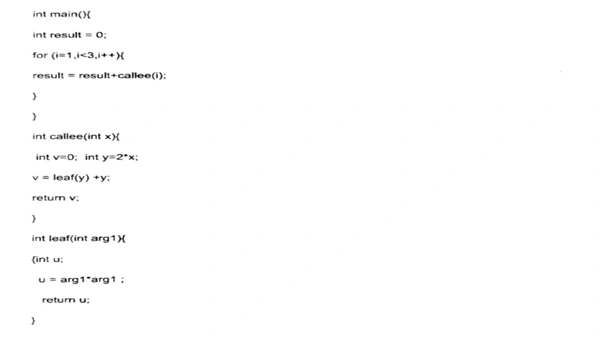
To write a C++ assignment program use proper syntax and format to convert the following C++ code to assembly language. The C++ code is given below.
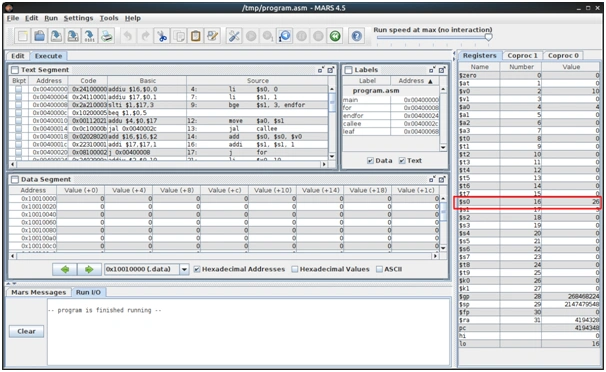
Screenshots of output
Source Code
.textmain: # result = 0 li $s0, 0 # for (i = 1; i < 3; i++) li $s1, 1for: bge $s1, 3, endfor # result = result + caller(i) move $a0, $s1 jal callee add $s0, $s0, $v0 addi $s1, $s1, 1 j forendfor: # return li $v0, 10 syscall# int callee(int x)callee: addi $sp, $sp, -12 sw $ra, 0($sp) sw $s0, 4($sp) sw $s1, 8($sp) # int v=0; li $s0, 0 # int y=2*x; sll $s1, $a0, 1 # v = leaf(y) +y; move $a0, $s1 jal leaf add $s0, $v0, $s1 # return v; move $v0, $s0 lw $ra, 0($sp) lw $s0, 4($sp) lw $s1, 8($sp) addi $sp, $sp, 12 jr $ra# int leaf(int arg1)leaf: # u = arg1 * arg1 mult $a0, $a0 # return v mflo $v0 jr $raRelated Samples
Discover our Assembly Language Assignments Sample Section, offering detailed solutions. From basic instruction sets to complex system calls, explore annotated code examples covering x86 architecture and beyond. Perfect for students mastering low-level programming and understanding hardware interaction. Enhance your skills and excel in assembly language assignments effortlessly.
Assembly Language
Word Count
11673 Words
Writer Name:Dr. Denise M. Lopez
Total Orders:500
Satisfaction rate:
Assembly Language
Word Count
3655 Words
Writer Name:Dr. John L. Sanders
Total Orders:900
Satisfaction rate:
Assembly Language
Word Count
11176 Words
Writer Name:Rehana Magnus
Total Orders:750
Satisfaction rate:
Assembly Language
Word Count
1782 Words
Writer Name:Rehana Magnus
Total Orders:750
Satisfaction rate:
Assembly Language
Word Count
7747 Words
Writer Name:Rehana Magnus
Total Orders:750
Satisfaction rate:
Assembly Language
Word Count
2371 Words
Writer Name:Rehana Magnus
Total Orders:750
Satisfaction rate:
Assembly Language
Word Count
1270 Words
Writer Name:Rehana Magnus
Total Orders:750
Satisfaction rate:
Assembly Language
Word Count
5650 Words
Writer Name:Rehana Magnus
Total Orders:750
Satisfaction rate:
Assembly Language
Word Count
5768 Words
Writer Name:Rehana Magnus
Total Orders:750
Satisfaction rate:
Assembly Language
Word Count
1586 Words
Writer Name:Rehana Magnus
Total Orders:750
Satisfaction rate:
Assembly Language
Word Count
2204 Words
Writer Name:Rehana Magnus
Total Orders:750
Satisfaction rate:
Assembly Language
Word Count
3452 Words
Writer Name:Rehana Magnus
Total Orders:750
Satisfaction rate:
Assembly Language
Word Count
6803 Words
Writer Name:Rehana Magnus
Total Orders:750
Satisfaction rate:
Assembly Language
Word Count
5272 Words
Writer Name:Rehana Magnus
Total Orders:750
Satisfaction rate:
Assembly Language
Word Count
2752 Words
Writer Name:Rehana Magnus
Total Orders:750
Satisfaction rate:
Assembly Language
Word Count
10514 Words
Writer Name:Rehana Magnus
Total Orders:750
Satisfaction rate:
Assembly Language
Word Count
2587 Words
Writer Name:Rehana Magnus
Total Orders:750
Satisfaction rate:
Assembly Language
Word Count
15048 Words
Writer Name:Rehana Magnus
Total Orders:750
Satisfaction rate:
Assembly Language
Word Count
4268 Words
Writer Name:Rehana Magnus
Total Orders:750
Satisfaction rate:
Assembly Language
Word Count
4470 Words
Writer Name:Rehana Magnus
Total Orders:750
Satisfaction rate: