How to Solve Vertical Axis Wind Turbine with Inverter Assignments Effectively

Claim Your Offer
Unlock an amazing offer at www.programminghomeworkhelp.com with our latest promotion. Get an incredible 10% off on your all programming assignment, ensuring top-quality assistance at an affordable price. Our team of expert programmers is here to help you, making your academic journey smoother and more cost-effective. Don't miss this chance to improve your skills and save on your studies. Take advantage of our offer now and secure exceptional help for your programming assignments.
We Accept








- Understanding the Core System and Assignment Requirements
- Breaking Down System Architecture
- IPO Flow
- Hardware vs Software
- Step-by-Step Practical Approach
- Turbine Modeling
- Subsystems
- Electrical Generation
- Integrating Inverter and Control
- Inverter Design
- Microcontroller
- Testing
- Tools and Real-World Implementation
- Performing Realistic Calculations
- Presenting Graphs and Observations
- Where Students Lose Marks
- Final Strategy to Score High
- Final Thoughts
Assignments based on a Vertical Axis Wind Turbine (VAWT) integrated with an inverter and embedded control system are among the most technically demanding yet high-scoring projects in electrical, electronics, and embedded engineering courses. These assignments go far beyond theory—they require you to design, analyze, implement, test, and explain a complete energy conversion and control system.
As seen in the attached assignment, such projects typically include components like a windmill, DC motor (generator), 12V battery, inverter circuit, MOSFET switching unit, transformer, LCD display, and ATmega328 microcontroller. The system converts wind energy into electrical energy and then into usable AC power while monitoring output using embedded programming.
However, the real challenge lies not in understanding individual components, but in integrating mechanical, electrical, and embedded systems into one working model. This is why many students search for solutions like “do my programming assignment” when they get stuck at coding, circuit design, or system integration stages. Projects like these also demand guidance similar to a Mechatronics assignment Helper, as they combine multiple engineering domains into a single system.
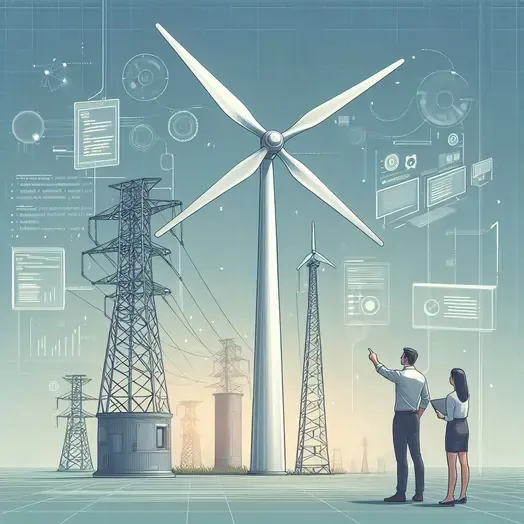
This blog provides a clear, practical, and technically strong roadmap to help you approach and solve such assignments effectively while improving both your understanding and academic performance. Instead of focusing only on theory, it emphasizes real-world execution, problem-solving strategies, and the exact approach needed to complete such assignments successfully.
Understanding the Core System and Assignment Requirements
Before jumping into implementation, you must understand how the entire system works. This step is critical because most mistakes happen due to a lack of clarity in system flow.
Breaking Down System Architecture
A Vertical Axis Wind Turbine system consists of:
- Wind Turbine (VAWT): Converts wind energy into rotational motion
- DC Motor/Generator: Converts mechanical energy into electrical energy
- Battery: Stores electrical energy
- Charge Controller: Regulates battery charging
- Inverter Circuit: Converts DC to AC
- Transformer: Steps up voltage
- MOSFET Switch: Controls inverter switching
- Microcontroller (ATmega328): Monitors system
- LCD Display: Shows output values
Energy Flow:
Wind → Mechanical → Electrical (DC) → Stored → AC Output → Load
Understanding this flow is essential because it defines how each component interacts with the others.
IPO Flow
- Input: Wind energy captured by turbine blades
- Process: Mechanical rotation → electrical conversion → regulation → storage → inversion
- Control: Microcontroller processes signals and manages outputs
- Output: AC power + LCD display data
This structured thinking is extremely useful in assignments because it allows you to:
- Write clear and logical answers
- Present confidently in viva
- Debug errors quickly by isolating stages
For example, if output is not correct, you can check each stage individually instead of guessing randomly.
Hardware vs Software
Hardware responsibilities:
- Energy generation and conversion
- Battery storage
- Inverter circuit operation
Software responsibilities:
- Reading voltage using ADC
- Processing data
- Displaying output on LCD
- Managing control logic
Key Insight:
The microcontroller acts as the brain of the system, connecting all hardware components. It collects data, processes it, and ensures proper system functioning. Ignoring this integration is one of the most common reasons students lose marks.
Step-by-Step Practical Approach
This is the most important section where you actually solve the assignment.
Turbine Modeling
Start with the energy source—the wind turbine.
Wind power depends on:
- Wind speed (v)
- Air density (ρ)
- Swept area (A)
Even if formulas are not required, you should conceptually understand:
- Higher wind speed → exponentially higher power
- Larger blade area → more energy capture
Practical Example:
If wind speed doubles, the power output increases significantly (not linearly). This explains why small changes in wind conditions can affect system output.
In assignments:
- Assume wind speed between 5–12 m/s
- Use realistic efficiency (30–40%)
Important:
VAWT systems are less efficient than horizontal turbines, so mentioning this adds strong technical credibility.
Subsystems
Break the system into manageable parts:
- Wind turbine + generator
- Battery storage system
- Microcontroller monitoring unit
- Inverter + load
Practical Execution Strategy:
- Rotate turbine manually → measure generated voltage
- Connect battery → verify charging behavior
- Test microcontroller separately with dummy input
- Integrate inverter at the final stage
This modular approach ensures that errors are identified early and reduces overall complexity.
Electrical Generation
The DC motor acts as a generator.
Key points:
- Voltage output depends on rotational speed (RPM)
- Output is not constant due to wind variation
- Stabilization is required
Deeper Explanation:
Mechanical energy from the turbine causes rotation, which induces voltage in the generator coils through electromagnetic induction. Faster rotation leads to higher induced voltage.
Practical Insight:
You may observe fluctuating voltage values—this is normal and should be explained in your assignment instead of ignored.
Integrating Inverter and Control
This section carries maximum marks because it demonstrates real engineering understanding.
Inverter Design
The inverter converts DC power into AC using:
- MOSFET switches
- Oscillating signals
- Transformer
Working principle:
- MOSFETs switch ON and OFF rapidly
- This creates alternating current
- Transformer increases voltage to usable level
Advanced Concepts:
- Output waveform may be square wave or PWM
- Harmonics may distort output
- Efficiency losses occur due to switching
Practical Example:
If switching is not properly controlled, output may be unstable, affecting load performance.
Microcontroller
The ATmega328 microcontroller performs monitoring and control tasks.
Functions:
- Reads voltage using ADC
- Converts analog signals into digital values
- Displays results on LCD
Basic Logic:
Initialize LCD
Read voltage
Convert ADC value
Display output
Repeat continuously
Deeper Understanding:
ADC converts analog voltage into a digital number that the microcontroller can process. This allows real-time monitoring of system performance.
Practical Tip:
Test ADC separately before integrating it with the full system.
Testing
System integration:
Turbine → Generator → Battery → Inverter → Load
Testing checklist:
- Check generator output
- Verify battery charging
- Monitor LCD readings
- Test AC output
Golden Rule:
Always test each subsystem individually before full integration.
Tools and Real-World Implementation
To make your assignment stand out, include practical validation.
Use tools like:
- Proteus (circuit simulation)
- MATLAB/Simulink (system modeling)
These tools help you:
- Validate circuit design
- Visualize system behavior
- Improve presentation quality
Performing Realistic Calculations
Instead of ideal assumptions, track energy step-by-step:
- Wind power input
- Mechanical output
- Electrical DC output
- AC output
Include losses:
- Mechanical losses (friction)
- Electrical losses (resistance)
- Conversion losses
Example:
- Wind power = 100W
- After turbine (40%) → 40W
- After generator (85%) → 34W
- After inverter (90%) → ~30W usable output
This type of calculation adds strong engineering value.
Presenting Graphs and Observations
Graphs make your assignment more convincing.
Include:
- Wind speed vs power output
- Voltage vs time
Add observations:
- Output increases with wind speed
- Voltage stabilizes after regulation
- LCD shows real-time data
Always explain what the graph shows.
Where Students Lose Marks
This is a high-impact section most blogs miss.
Students commonly lose marks due to:
- Ignoring energy flow explanation
- Writing theory without practical linkage
- Not explaining inverter working properly
- Weak microcontroller explanation
- No diagrams or observations
Solution:
- Always connect theory with implementation
- Explain each stage clearly
- Use diagrams and examples
Final Strategy to Score High
To maximize marks:
- Explain complete energy flow
- Use realistic assumptions
- Show inverter + microcontroller understanding
- Include diagrams, graphs, and calculations
- Maintain practical + theoretical balance
Think like an engineer, not just a student.
Final Thoughts
The Vertical Axis Wind Turbine with inverter assignment is a complete engineering system. Once you break it into subsystems and follow a structured approach, even complex projects become manageable.
Understand → Break → Build → Test → Optimize → Explain
Master this approach to confidently solve similar projects like solar inverter systems, battery management systems, and IoT-based energy monitoring systems.