Developing a Smart Android-Based Juice Dispensing Automation Project

Claim Your Offer
Unlock an amazing offer at www.programminghomeworkhelp.com with our latest promotion. Get an incredible 10% off on your all programming assignment, ensuring top-quality assistance at an affordable price. Our team of expert programmers is here to help you, making your academic journey smoother and more cost-effective. Don't miss this chance to improve your skills and save on your studies. Take advantage of our offer now and secure exceptional help for your programming assignments.
We Accept








- Understanding the Core Requirements of Android-Controlled Vending Machine Assignments
- Identifying the Main Functionalities of the System
- Understanding the Hardware Components Used in the Assignment
- Analyzing the Expected Software Workflow
- Building the Programming Logic for Embedded Automation Projects
- Writing Efficient Arduino and Embedded C Code
- Managing Bluetooth Communication with Android Applications
- Solving Common Challenges in Sensor and Motor Integration
- Handling IR Sensors and Automatic Detection Systems
- Controlling Pump Motors Safely and Efficiently
- Debugging Hardware and Software Integration Errors
- Best Practices for Completing Smart Automation Assignments Successfully
Smart automation projects based on Android-powered vending machines are among the most practical embedded programming assignments given to engineering and computer science students. These projects combine Bluetooth communication, IR sensors, Atmega microcontrollers, LCD displays, motor pumps, and Embedded C programming into one complete automation system. In assignments similar to smart juice vending machines, students are expected to develop a system that can detect coin insertion, receive commands from an Android phone, verify glass placement using sensors, and automatically control liquid dispensing in real time. Because these projects involve both hardware and software integration, many students seek reliable Embedded Systems Assignment Help to better understand system architecture and implementation.
Unlike basic Arduino coding tasks, Android-controlled vending machine assignments require students to manage sensor interfacing, Bluetooth communication, motor control logic, debugging, and real-time automation simultaneously. Even small issues in wiring, sensor calibration, or program flow can stop the entire system from functioning correctly. This is why many students look for professional help with programming assignment projects involving embedded systems, automation, and microcontroller programming. With the right development approach, modular testing strategy, and efficient coding practices, students can successfully build stable and high-scoring smart automation projects.
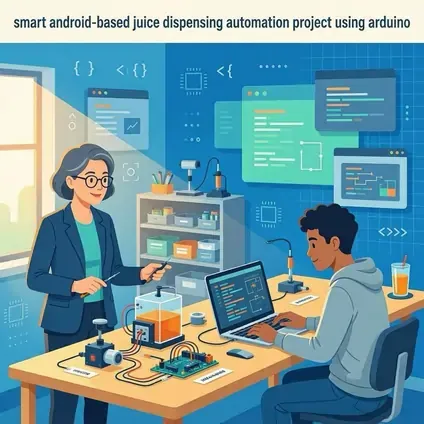
Understanding the Core Requirements of Android-Controlled Vending Machine Assignments
Before writing code or connecting hardware components, students must first understand the actual purpose of the assignment. Most smart vending machine projects are designed to test how well students can combine automation, embedded programming, and hardware communication into a real-world system.
Identifying the Main Functionalities of the System
The first step in solving any embedded automation assignment is identifying the major functionalities the system is expected to perform.
Most Android-controlled vending machine projects involve operations such as:
- Coin detection and validation
- Bluetooth communication with Android devices
- Product or juice selection through a mobile app
- Pump or motor activation
- Glass detection using IR sensors
- Automatic overflow prevention
- LCD display notifications
- Buzzer alerts and safety conditions
Many students start coding immediately without properly understanding how these modules interact together. This creates major problems later during hardware integration and debugging.
The best strategy is to divide the assignment into smaller subsystems such as:
- Coin module
- Bluetooth communication module
- IR sensor detection system
- Motor or pump control section
- LCD display and notification system
Once each module is understood independently, integrating them into one complete system becomes much easier.
This modular development approach is extremely important in Arduino and Atmega-based projects because several hardware components operate simultaneously. Improper planning can create communication conflicts, unstable outputs, and unpredictable system behavior.
Students who first focus on understanding the assignment architecture generally complete projects faster and produce cleaner implementations.
Understanding the Hardware Components Used in the Assignment
Assignments involving smart vending systems heavily depend on hardware-software interaction. Students who only focus on programming often face serious issues during practical implementation because embedded systems require correct hardware interfacing as well.
Typical hardware components used in these assignments include:
- Arduino or Atmega microcontroller
- Bluetooth modules like HC-05 or HC-06
- IR transmitter and receiver sensors
- Pump motors
- Coin acceptor modules
- LCD displays
- Relay modules
- Buzzer circuits
- Power supply units
- Transistors and resistors
Each component performs a specific function inside the system.
For instance:
- The Bluetooth module allows communication between the Android application and microcontroller.
- The IR sensor detects whether the glass is placed below the dispenser.
- The pump motor controls liquid dispensing.
- The LCD displays user instructions and system status.
One of the most common mistakes students make is incorrect pin configuration. Even when the hardware is connected properly, defining wrong input or output pins inside the code can cause the entire system to malfunction.
To avoid this issue, students should test every component independently before combining them together.
For example:
- Verify LCD communication separately
- Test Bluetooth data transmission independently
- Run motor control circuits individually
- Check sensor response using serial monitoring
This staged testing approach significantly reduces debugging complexity later in the project.
Analyzing the Expected Software Workflow
The programming logic behind smart vending machine assignments is usually event-driven. The microcontroller continuously waits for user actions and sensor inputs before triggering corresponding outputs.
A common workflow in these assignments looks like this:
- System powers ON
- LCD displays instructions
- Coin gets inserted
- Bluetooth connection established
- User selects juice from Android app
- IR sensor checks glass presence
- Pump motor starts
- Sensor monitors liquid level
- Motor stops automatically
- System resets for the next user
Students must clearly understand how these conditions connect logically inside the code.
Most projects use Arduino IDE and Embedded C programming language. The software structure generally includes:
- Setup function
- Loop function
- Sensor monitoring conditions
- Serial communication handling
- Motor control logic
- Timing and delay management
The assignment is not simply about syntax or programming theory. The real challenge is controlling real hardware behavior through efficient embedded logic.
Building the Programming Logic for Embedded Automation Projects
Once students understand the project requirements and system architecture, the next step is implementing stable programming logic. This is the stage where many assignments fail because embedded systems require organized and efficient coding practices.
Writing Efficient Arduino and Embedded C Code
Assignments involving smart vending machines are usually developed using Arduino IDE because it simplifies hardware programming and real-time testing. However, beginners often write large unstructured programs that become difficult to debug and maintain later.
A much better approach is dividing the code into logical sections such as:
- System initialization
- Sensor reading functions
- Bluetooth communication handling
- Motor activation functions
- LCD display updates
- Error handling conditions
Instead of writing all operations inside the main loop function, students should create separate functions for each task.
This improves:
- Code readability
- Debugging efficiency
- Error tracing
- Program organization
- Reusability
Efficient embedded programming also requires proper timing management. Many students overuse delay functions, which can temporarily freeze sensor monitoring and communication processing.
For example, while the motor is dispensing juice, the system must still monitor:
- Glass presence
- Overflow conditions
- Bluetooth communication
- Emergency stop logic
Using excessive delays can cause the IR sensor to respond too late, resulting in overflow.
Therefore, students should:
- Minimize unnecessary delays
- Use structured conditional logic
- Continuously monitor sensors
- Maintain real-time responsiveness
Assignments with clean and optimized code usually receive higher evaluation scores because they demonstrate strong programming fundamentals and practical implementation skills.
Managing Bluetooth Communication with Android Applications
Bluetooth communication is one of the most critical parts of Android-powered vending machine assignments. The Android application sends commands to the Bluetooth module connected to the microcontroller, which then activates the required hardware outputs.
Most assignments use HC-05 or HC-06 Bluetooth modules because they are inexpensive and easy to configure.
The communication process generally works like this:
- Android app sends command
- Bluetooth module receives data
- Microcontroller reads serial input
- Program checks command value
- Corresponding motor or pump activates
Students frequently face issues such as:
- Bluetooth pairing failures
- Incorrect baud rate settings
- Delayed response handling
- Data mismatch errors
- Unstable communication
To solve these problems, communication settings must remain consistent between the mobile application and microcontroller.
Students should verify:
- Baud rate configuration
- Serial communication settings
- Proper voltage supply
- Stable Bluetooth pairing
A smart debugging method is printing received Bluetooth commands directly onto the serial monitor before activating hardware outputs.
This helps students identify whether the issue exists in:
- Android application
- Bluetooth module
- Serial communication
- Embedded program logic
Testing Bluetooth communication independently before integrating sensors and motors saves a significant amount of development time.
Solving Common Challenges in Sensor and Motor Integration
Hardware integration is usually the most difficult stage of smart automation assignments. Even when the code appears correct, improper synchronization between sensors, motors, and communication modules can prevent successful system operation.
Handling IR Sensors and Automatic Detection Systems
IR sensors play a major role in smart vending machine assignments because they are used for:
- Glass detection
- Liquid level monitoring
- Overflow prevention
- Object detection
These sensors operate by transmitting infrared signals and detecting reflections from nearby objects.
Students often face problems such as:
- False triggering
- Inconsistent sensor readings
- Delayed detection
- Ambient light interference
To improve reliability, sensor calibration becomes extremely important.
Students should:
- Adjust sensor sensitivity
- Test different detection ranges
- Maintain stable power connections
- Avoid loose wiring
Assignments involving liquid dispensing systems require accurate detection because incorrect sensing can cause overflow or failed dispensing operations.
The programming logic should continuously monitor the sensor while the motor is running. If the system detects that the glass is full, the motor must stop immediately.
Another important practice is implementing safety conditions such as:
- Preventing operation without glass detection
- Activating buzzer warnings
- Displaying LCD error messages
These additional features improve both functionality and assignment quality.
Controlling Pump Motors Safely and Efficiently
Motor control is another major challenge in embedded automation projects.
Pump motors cannot usually connect directly to microcontroller pins because motors require higher current and may damage the controller through voltage spikes.
Therefore, most assignments use:
- Relay modules
- Transistor switching circuits
- Motor driver ICs
Students must understand how switching circuits operate before implementing motor control logic.
A common dispensing workflow includes:
- Receive user selection
- Verify glass presence
- Activate relay
- Start motor
- Monitor sensor status
- Stop motor automatically
Timing management is extremely important here. If the motor runs too long, overflow occurs. If it stops too early, the dispensing process becomes inaccurate.
A reliable strategy is combining:
- Sensor monitoring
- Controlled timing logic
- Safety conditions
Students should also ensure stable power isolation between the motor supply and microcontroller power source because unstable voltage often causes random system resets during motor activation.
Assignments demonstrating smooth motor control and stable dispensing behavior usually receive better academic evaluation.
Debugging Hardware and Software Integration Errors
Debugging is an unavoidable part of embedded system assignments. Smart vending machine projects contain multiple interconnected modules, so identifying failures requires systematic testing.
Common problems include:
- Sensors not responding
- Bluetooth disconnecting randomly
- LCD showing incorrect data
- Motors failing to activate
- Random controller resets
- Coin module reading errors
The best debugging strategy is sequential module testing.
Instead of running the full system immediately:
- Test sensors independently
- Verify LCD operation
- Confirm Bluetooth communication
- Run motors individually
- Integrate modules step-by-step
Students should also use:
- Serial monitor debugging
- LED indicators
- Multimeter voltage testing
- Continuity checking
Adding temporary debugging messages inside the program also helps identify execution flow issues.
For example:
- “Coin Detected”
- “Bluetooth Connected”
- “Glass Missing”
- “Motor Started”
These messages help students identify exactly where the system stops functioning.
Most embedded assignment failures happen because students attempt full system integration too early without validating individual modules first.
Best Practices for Completing Smart Automation Assignments Successfully
Assignments involving Android-controlled automation systems require much more than basic programming knowledge. Students must combine coding, electronics, testing, debugging, and technical documentation into one complete implementation.
Well-structured project planning is often the difference between a successful demonstration and a non-functional prototype.
Students should always prepare:
- Block diagrams
- Circuit diagrams
- Flowcharts
- Pin configuration tables
- Algorithm explanations
- Hardware specifications
- Software specifications
Good documentation not only improves grades but also demonstrates technical understanding during viva examinations.
Flowcharts are especially useful because they visually explain:
- User interaction flow
- Sensor conditions
- Error handling logic
- Automation process
Another major factor is proper system testing before final submission.
Students should test:
- Bluetooth range stability
- Sensor accuracy
- Overflow prevention
- Continuous dispensing cycles
- LCD notifications
- Coin detection reliability
Real-world testing helps identify hidden issues before project demonstrations.
Many students also struggle because these assignments require expertise in multiple domains simultaneously:
- Embedded programming
- Electronics hardware
- Sensor interfacing
- Android communication
- Circuit debugging
- System integration
This is why professional programming assignment help has become increasingly popular among engineering and computer science students.
Expert guidance can help students:
- Optimize Arduino and Embedded C code
- Debug hardware integration issues
- Improve Bluetooth communication reliability
- Create proper project documentation
- Build accurate circuit connections
- Prepare for viva and demonstrations
Assignments involving Android-powered vending machines are designed to simulate real-world automation systems. Successfully completing such projects requires not only technical skills but also structured planning, efficient debugging, and practical implementation knowledge.
As embedded systems, IoT devices, and smart automation technologies continue expanding across industries, learning how to solve these assignments effectively becomes an important skill for students pursuing careers in programming, electronics, robotics, and intelligent system development.